RT.com
03 Aug 2025, 18:10 GMT+10
In orbit, not in opposition: Moscow and Washington find rare common ground in space
The head of Roscosmos, Dmitry Bakanov, has made a rare visit to the United States - his first official trip since assuming the top job at Russia's space agency. The occasion? To attend the launch of Russian cosmonaut Oleg Platonov aboard a SpaceX spacecraft and to meet with his counterpart, acting NASA Administrator Sean Duffy.
Whether or not he meets Elon Musk remains to be seen. But this trip is significant far beyond the question of private handshakes.
This was, first and foremost, a political and diplomatic visit - the kind that's planned months in advance and requires high-level approval. That it's taking place now, in the midst of a direct confrontation between Moscow and Washington over Ukraine, speaks volumes. It marks the first in-person meeting between the heads of Roscosmos and NASA since 2018, when Dmitry Rogozin hosted Jim Bridenstine at Baikonur.
Rogozin's own planned return visit to the US was blocked in late 2018, despite his openness to meeting Musk. His inclusion on Western sanctions lists made it politically toxic for Washington to host him. Subsequent Roscosmos chief Yury Borisov never even got the opportunity for face-to-face talks - the Biden administration declined, citing political optics during the Ukraine conflict. Communications were limited to a few phone calls. But with the return of Donald Trump to the White House and a reshuffled US space leadership, conditions for engagement have shifted.
It hardly matters that the American side was represented by an acting official - Sean Duffy, appointed just two weeks ago - or that NASA has seen more leadership turnover than Roscosmos in recent years. Duffy doesn't make key decisions. He speaks for the White House. The symbolism lies in the fact that a meeting is happening at all, after years of virtual silence under the Biden administration.
The timing is not accidental. The meeting coincided with the anniversary of the 1975 Apollo-Soyuz mission, when the US and USSR docked their spacecrafts in orbit at the height of the Cold War. Back then, both sides had nuclear weapons aimed at each other's capitals. And yet, they still shook hands in space. If they could do it then, the logic goes, they can do it now.
The second reason for the visit - the flight of a Russian cosmonaut on an American spacecraft - sends an equally pointed message: despite geopolitical conflict, collaboration remains possible. NASA's reliance on Musk's rockets has only grown, especially after Boeing's Starliner program stumbled again. The next Starliner launch is planned as a cargo-only mission; crewed flights are on hold. Caution prevails.
In this context, the Roscosmos visit functions as a subtle form of diplomacy: why fight down here when we could build together up there? The International Space Station (ISS) remains the last major joint venture between Russia and the US. Beyond it, nothing binds the two powers in peaceful cooperation.
While technical matters were on the agenda, diplomacy took precedence. Still, two important points emerged from the talks. First, Sergey Krikalev - Russia's special presidential envoy for space - hinted that both sides have preliminarily agreed to extend ISS operations until 2030. Previously, the Russian government had only committed to supporting its segment of the station until 2028, anticipating that the first module of its next-generation Russian Orbital Station (ROS) would be launched by then. The US, meanwhile, has committed to operating its segment until 2030, with the possibility of continuing through 2032.
Krikalev's statement carries weight. As a presidential envoy, he can speak with more flexibility than Bakanov, who is still bound by formal government directives. Nevertheless, the implication is clear: the door is open to extending joint operations well beyond 2028.
Second, Bakanov stated that the two sides also discussed future space cooperation - including potential collaboration on the Russian orbital station and on deeper space missions. If negotiations go well, we could see the ISS extended through 2035, with Russia possibly participating in - or helping shape - a successor project: an ISS-2. For Trump, a renewed global space station could be cast as a diplomatic victory, potentially traded for Western concessions on Ukraine.
If that happens, Russia's role in ISS-2, especially in partnership with BRICS countries, would elevate the project into a truly multipolar enterprise. A space station that is not just international, but universal.
And then there is the Mars question - Musk's long-standing obsession and a second pillar of any future space agenda. A meeting between Bakanov and Musk, if it happens, would be behind closed doors and entirely unofficial. Just like when Vladimir Popovkin, a former Russian space chief, secretly met with Musk years ago.
Bakanov's goal, it seems, is to demonstrate that Russia's aerospace sector has something to offer - that it is not a relic, but a relevant partner in humanity's next leap. If Russia does not participate in the Mars project, it risks being left behind.
But what could attract Musk's attention? In reality, Russia has two trump cards: its nuclear-powered space tug technology and its deep, unmatched experience in space medicine. If harnessed wisely, these assets could give Moscow a seat at the Mars table - whether as partner or competitor.
In sum, the Roscosmos visit to the US is about far more than a launch or a handshake. It's a signal - deliberate and strategic - that Russia still sees space as a domain for cooperation, not conflict. And that in the great void above us, there may yet be room for common ground.
This article was first published by the online newspaperGazeta.ruand was translated and edited by the RT team
(RT.com)
Get a daily dose of Calgary Monitor news through our daily email, its complimentary and keeps you fully up to date with world and business news as well.
Publish news of your business, community or sports group, personnel appointments, major event and more by submitting a news release to Calgary Monitor.
More InformationIn orbit, not in opposition: Moscow and Washington find rare common ground in space ...
In orbit, not in opposition: Moscow and Washington find rare common ground in space The head of Roscosmos, Dmitry Bakanov, has made...
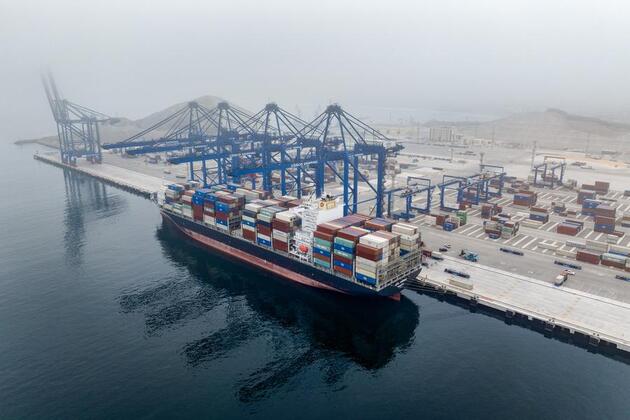
* The construction of the Port of Chancay, launched in 2021, is creating a maritime gateway to Asia and beyond, revitalizing the city's...
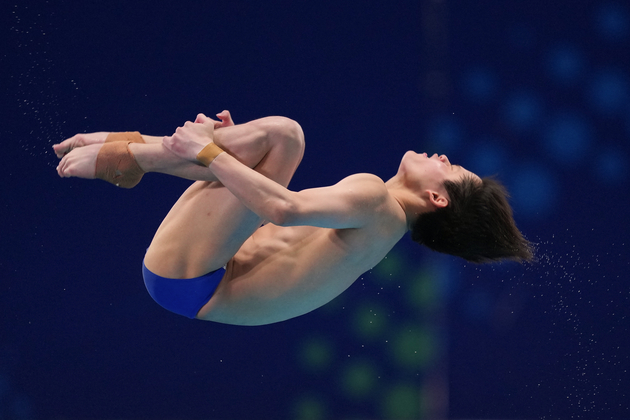
(250803) -- SINGAPORE, Aug. 3, 2025 (Xinhua) -- Zhu Zifeng of China competes during the men's 10m platform final of diving at the World...
European leaders handled the trade deal with the United States too weakly, said a Spanish economist, noting that the EU has tools to...
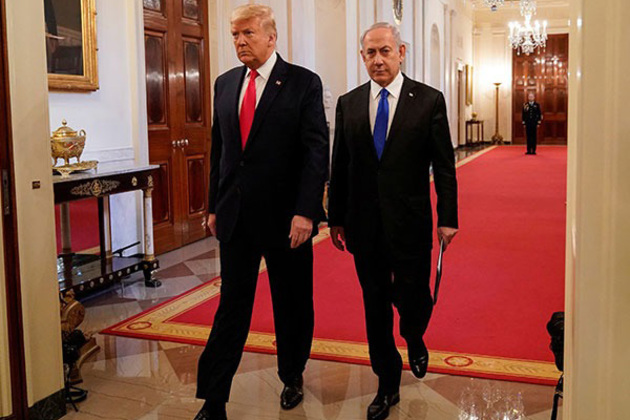
Tel Aviv [Israel], August 3 (ANI): Israeli Prime Minister Benjamin Netanyahu and US President Donald Trump are engaged in advanced...
WASHINGTON, D.C.: With the clock ticking toward a self-imposed trade deal deadline, U.S. President Donald Trump has announced steep...
LONDON/NEW YORK: U.S. President Donald Trump's tariffs are designed to strengthen domestic manufacturing. But in the chocolate industry,...
TORONTO, Canada: In a landmark policy shift, Canadian Prime Minister Mark Carney announced this week that Canada will officially recognize...
(Photo credit: James A. Pittman-Imagn Images) Baltimore's Brandon Young will get another shot at earning his first major league win...
(Photo credit: David Richard-Imagn Images) The Minnesota Twins essentially wiped the slate clean before their series at the Cleveland...
(Photo credit: Kevin Sousa-Imagn Images) Salvador Perez is on a homer binge, and the visiting Kansas City Royals would like the trend...