RFE
02 Sep 2025, 20:25 GMT+10
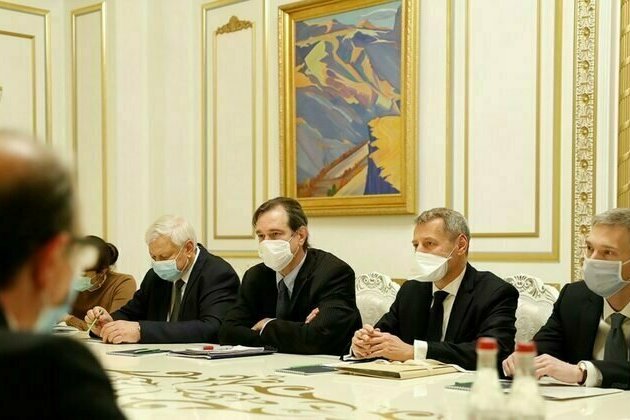
On September 1, the OSCEs 57 member states unanimously decided to wind down the OSCE Minsk Group by the end of the year.
Created in 1992 to find a peaceful, negotiated resolution to the conflict between Armenia and Azerbaijan over Nagorno-Karabakh, the group has been effectively moribund since Russia's full-scale invasion of Ukraine in February 2022.
Then, last month, Armenia and Azerbaijan signed a US-brokered peace treaty outside of the group.
RFE/RL takes a look at how it was set-up, what it accomplished, and what its dissolution means.
It was set up by OSCEs predecessor, the CSCE (Conference on Security and Cooperation in Europe) 33 years ago in the middle of the first Nagorno-Karabakh war as a way of providing a forum for settling the conflict.
In many ways, there were high hopes at the time that the international community could solve the issue in the wake of the dissolution of the Soviet Union and rapid democratization in the former Warsaw pact countries.
The idea was initially that a conference would take place in Minsk, hence the name of the group, but to this day no meeting ever took place in the Belarusian capital.
But the group fleshed out a structure, which included three permanently rotating co-chairs - France, Russia and the United States -- as well as a number of participating states that -- apart from the belligerents Armenia and Azerbaijan -- also included Belarus, Finland, Germany, Italy, Sweden, and Turkey.
The objectives were clear: achieve a cessation of all hostilities, find a negotiated resolution, and provide OSCE peacekeepers to maintain order.
No. The OSCE was involved here as well but the Minsk agreements (also known as Minsk I & II or the Minsk protocols) were another international attempt to settle a different conflict.
This time it concerned the fighting between Ukraine and Russian-backed separatists in Donetsk and Luhansk back in 2014.
In addition to the OSCE, Russia, and Ukraine, the negotiators in this instance also included France and Germany, and they actually met frequently in the Belarusian capital.
But much like the OSCE Minsk Group, it is fair to say that the Minsk agreements didnt really achieve much as Russia launched a full-scale invasion of Ukraine in 2022.
In all honesty, very little, if anything.
None of the objectives were accomplished and OSCE diplomats speaking to RFE/RL under condition of anonymity admit that as well. They also added that perhaps the only credit the group could take was that it snuffed out growing tensions between Baku and Yerevan in the late 1990s and early 2000s.
In the end the consensus-based nature of the OSCE with constant vetoes prevented the group from ever being effective.
It didnt help that tensions between the co-chairs were growing, notably after Russias forcible annexation of Crimea in 2014, and became damaged beyond repair after the full-scale invasion of Ukraine eight years later.
Azerbaijan, on the other hand, was also never happy with France and the United States, often accusing them of being biased and pandering to their respective Armenian diasporas.
The writing was on the wall as soon as the second Nagorno-Karabakh war broke out in the autumn of 2020.
With Azerbaijan seizing large parts of the disputed territories, Baku immediately called for an end to the Minsk Group. With the country capturing the remaining Armenian-held areas three years later, the call was reiterated with even more vigor.
The fact that the OSCE was totally sidelined during these hostilities and Russian peacekeepers failed to intervene were clear signs that the group had been rendered moot.
As part of a peace deal initialed under the auspices of US President Donald Trump in early August, Armenia also came onboard with the idea of getting rid of the group despite the protests of exiled Karabakh Armenians, who noted that dissolving the Minsk Group would legitimize the ethnic cleansing carried out by Azerbaijan in Nagorno-Karabakh.
Interestingly, it could mean that the OSCE might pass its first budget since 2021.
The Vienna-based organization needs unanimity to approve its financial framework, and Baku has so far vetoed the 158-million-euro ($184 million) package as it still contains money for the Minsk Group.
It remains to be seen, however, if Russia will give its thumbs up as Moscow has also been critical on several issues, such as the OSCE's activities in Ukraine and the election-monitoring activities of the organization's Office for Democratic Institutions and Human Rights, which the Kremlin considers politically biased.
Russia will also be interesting to watch going forward.
Does the demise of the Minsk Group signal a decreasing Russian influence in the South Caucasus?
And where does all this leave the OSCE?
The Helsinki Final Act, which paved the way for the organization, recently turned 50 years old, something that was marked by a lavish ceremony in the Finnish capital earlier this summer.
What became clear from that bash was that there is littleconsensusover what the OSCE actually will focus on going forward.
But the ramifications will be felt beyond the OSCE, with international organizations taking the heat for not being able to step up and solve crises.
The European Union, which already is fretting over being locked out of negotiations about Ukraines future, is also pondering whether its monitoring mission to Armenia (EUMM) should be the next to fold.
The mission, set up two years ago to monitor Armenias border with Azerbaijan, has previously provoked ire from Baku despite its moderate size of only 200 observers.
With Azerbaijan successfully pushing for the Minsk Group to go, European diplomats think the EUMM might be next.
Get a daily dose of Calgary Monitor news through our daily email, its complimentary and keeps you fully up to date with world and business news as well.
Publish news of your business, community or sports group, personnel appointments, major event and more by submitting a news release to Calgary Monitor.
More InformationBarcelona [Spain], September 2 (ANI): Following a memorable 2024-25 season with Barcelona, teenage football sensation Lamine Yamal...
New Delhi [India], September 2 (ANI): India is one of the best-performing G20 nations in meeting our sustainability commitments, said...
The 1985 expedition to the sunken ocean liner was a front for testing a new deep-sea imaging system, the head of the mission has said...
On September 1, the OSCEs 57 member states unanimously decided to wind down the OSCE Minsk Group by the end of the year. Created...
The move follows President Donald Trumps order last month ending duty-free entry for parcels valued at less than $800 The South African...
Toronto [Canada], September 2 (ANI): The Canadian Baloch Congress (CBC) hosted a human rights conference in Toronto in recognition...
NEW YORK CITY, New York: U.S. shoppers who have grown used to ordering cheap goods from overseas will soon see higher prices at checkout....
In a move decried as a violation of international agreements and a severe blow to diplomatic efforts, the United States has systematically...
The 1985 expedition to the sunken ocean liner was a front for testing a new deep-sea imaging system, the head of the mission has said...
Toronto [Canada], September 2 (ANI): The Canadian Baloch Congress (CBC) hosted a human rights conference in Toronto in recognition...
(Photo credit: Erik Williams-Imagn Images) The Houston Astros waited the bulk of this season for three members of their starting...
(Photo credit: Denny Medley-Imagn Images) Trying to remain a serious postseason contender, the Kansas City Royals must take advantage...