Xinhua
26 Feb 2026, 21:15 GMT+10
Washington's erratic and unpredictable tariff policies have unsettled key allies, including the United Kingdom and Australia, while fueling greater uncertainty throughout the global trading system.
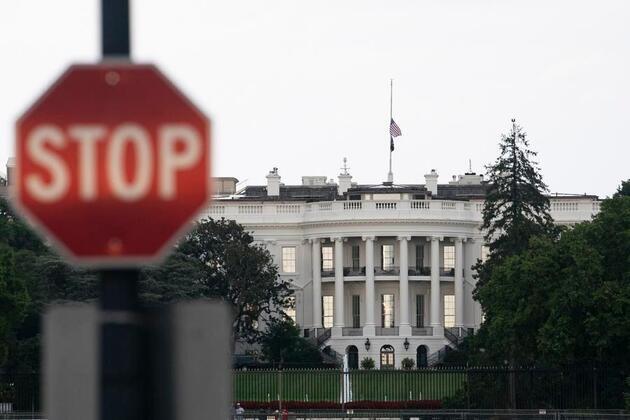
LONDON, Feb. 26 (Xinhua) -- The United States began enforcing a new round of global tariffs Tuesday, imposing a 10 percent levy on most imports to replace broad duties recently struck down by the Supreme Court. The Trump administration has also indicated plans to raise the rate to 15 percent.
The U.S. Supreme Court ruled last week that earlier duties imposed under the International Emergency Economic Powers Act of 1977 lacked legal authority. In response, the Trump administration shifted to Section 122 of the Trade Act of 1974, which allows temporary tariffs of up to 150 days without congressional approval.
Washington's erratic and unpredictable tariff policies have unsettled key allies, including the United Kingdom and Australia, while fueling greater uncertainty throughout the global trading system.
First of all, the legal reset has scrambled the global trade landscape. Some countries that were previously at a tariff disadvantage now find themselves on a more favorable footing. Others, including the UK and Australia, are facing relatively higher effective trade barriers.
John Bryson, professor of international economic geography at the University of Birmingham, said the change has produced uneven consequences across economies.
"Countries that had been left in an unfavourable tariff position suddenly found themselves in a more favourable position, whilst countries like the UK and Australia found themselves in a less favourable position," Bryson told Xinhua.
British business groups warn the impact could be significant. William Bain, head of trade policy at the British Chambers of Commerce, said around 40,000 UK firms exporting goods to the United States may be affected.
The shift "means an extra 5 percent increase in tariffs on a wide range of UK goods exports to the U.S., except those covered under the Economic Prosperity Deal," Bain said. He estimated the additional burden on British exporters could reach between 2 billion and 3 billion pounds (2.7-4.06 billion U.S. dollars).
"This will be bad for trade, bad for U.S. consumers and businesses and weaken global economic growth," Bain said. "Businesses on both sides of the Atlantic need a period of clarity and certainty. Higher tariffs are not the way to achieve that."
For Australia and other trade-dependent economies, analysts say the impact goes beyond headline export numbers. Modern production networks stretch across multiple countries, meaning tariff shifts can ripple through supply chains in complex ways.
Felicity Deane, professor at Queensland University of Technology, said bilateral trade data alone cannot capture the full effects. Many products sold by UK and Australian firms are manufactured or assembled elsewhere, exposing entire production networks to higher costs.
She also noted that the continued suspension of the de minimis exemption means even small-value shipments now face tariffs. "All goods must pay the 15 percent tariff rate as well, which would make it more expensive for companies that ship small-value items to the U.S.," she said.
While the tariffs generate revenue, with earlier rounds bringing in more than 130 billion dollars, analysts stress that the economic burden ultimately falls on American consumers and businesses. Bryson said the Supreme Court ruling also raises the possibility that importers could seek refunds on previously imposed duties, potentially triggering administrative and legal complications.
The episode has also exposed the limits of political alliances in U.S. trade policy. Ian Scott, professor at the University of Manchester, said recent developments suggest that longstanding partnerships offer little insulation when Washington prioritizes economic leverage.
"The 'special relationship' means nothing to Trump when he's on a mission and is intent on flexing his muscles," Scott said.
Beyond the immediate impact on specific countries, economists warn that more serious damage lies in rising unpredictability. The core issue, they argue, is not whether tariffs stand at 10 percent or 15 percent, but the growing instability of the rules governing global trade.
Bryson said repeated shifts in U.S. tariff policy have made it increasingly difficult for businesses to plan investment and production decisions.
"Donald Trump is an expert in creating uncertainty," Bryson noted. "Business requires certainty and with Trump there is no certainty," he added, warning that unstable policy conditions can undermine investment, growth and employment.
Further uncertainty stems from the temporary legal foundation of the new tariffs. Section 122 permits duties for only 150 days without congressional approval, leaving open the possibility of another legal or political reversal.
Scott said the Supreme Court ruling underscored constitutional limits on presidential authority in trade policy.
"Having seen existing tariff structures struck down by the Supreme Court, one wonders what he expects will happen in time with this latest declaration," Scott said.
With the administration already signaling a rise from 10 percent to 15 percent, businesses and governments alike are bracing for further volatility and questioning how durable the new tariff regime will prove to be.
Get a daily dose of Calgary Monitor news through our daily email, its complimentary and keeps you fully up to date with world and business news as well.
Publish news of your business, community or sports group, personnel appointments, major event and more by submitting a news release to Calgary Monitor.
More InformationBRUSSELS, Belgium: Europe is increasingly looking to Chinese and Indian travellers to sustain tourism growth, as signs emerge of a...
Washington's erratic and unpredictable tariff policies have unsettled key allies, including the United Kingdom and Australia, while...
(Photo credit: Kiyoshi Mio-Imagn Images) The Los Angeles Kings and Edmonton Oilers knew the importance of starting strong following...
(Photo credit: Jerome Miron-Imagn Images) The St. Louis Blues return from their Olympic break as a team in transition. The Blues...
(260226) -- TAICANG, Feb. 26, 2026 (Xinhua) -- Jiang Xiaohua (L) discusses customer plans with a colleague of the sales department...
The Middle East has repeatedly borne the consequences of wars launched in the name of security or order. Time and again, military intervention...
TORONTO, Canada: OpenAI said it had considered alerting Canadian police last year about a user account later linked to one of the deadliest...
LONDON, U.K.: Nestle is moving to divest its remaining ice cream businesses as new CEO Philipp Navratil presses ahead with efforts...
(Photo credit: Jayne Kamin-Oncea-Imagn Images) Veteran Max Scherzer is rejoining the Toronto Blue Jays on a one-year, $3 million...
(Photo credit: Kiyoshi Mio-Imagn Images) The Los Angeles Kings and Edmonton Oilers knew the importance of starting strong following...
(Photo credit: Jerome Miron-Imagn Images) The St. Louis Blues return from their Olympic break as a team in transition. The Blues...
(Photo credit: John E. Sokolowski-Imagn Images) The San Antonio Spurs are on their longest winning streak since Tim Duncan concluded...