Experts say the reorganization bears a clear "offensive" character. Japan's accelerating military buildup underscores its "remilitarization" ambitions, posing a threat to regional peace and stability.
TOKYO, March 29 (Xinhua) -- The Japanese government, led by Sanae Takaichi, has recently carried out a sweeping reorganization of the Self-Defense Forces (SDF), including what it calls the "largest-ever reorganization" of the Maritime Self-Defense Force (MSDF), along with an expansion of operations in the cognitive domain and the enlargement of the Space Operations Group.
Experts say the reorganization bears a clear "offensive" character. Japan's accelerating military buildup underscores its "remilitarization" ambitions, posing a threat to regional peace and stability.
LARGEST REORGANIZATION IN HISTORY
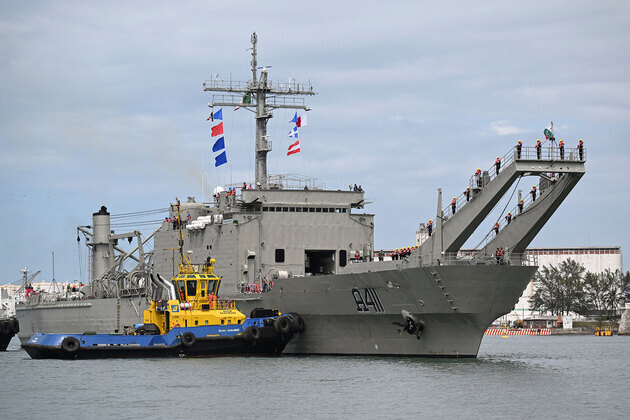
The most significant changes in this reorganization concern the MSDF. Its main units, the Fleet Escort Force and the Mine Warfare Force, have been disbanded and consolidated into a newly established Fleet Surface Force, which centralizes command and control over destroyers, minesweepers and other surface vessels.
Through the shakeup, the Fleet Surface Force will consist of three surface warfare groups, along with a Patrol and Defense Group and an Amphibious and Mine Warfare Group.
Established in 1961, the Fleet Escort Force has a long history, which is why some Japanese media have described this overhaul as "the biggest reorganization" in the history of the MSDF.
Lu Hao, an expert from the Institute of Japanese Studies at the Chinese Academy of Social Sciences, said this reorganization breaks with the MSDF's tradition of organizing units by vessel type. The move, he said, is to build a more integrated, combat-ready fleet, laying the groundwork for creating a carrier strike group.
Japanese media also reported that the headquarters of the Amphibious and Mine Warfare Group is located in Sasebo, Nagasaki Prefecture, enabling closer coordination with the Ground Self-Defense Force's (GSDF) Amphibious Rapid Deployment Brigade, also headquartered in Sasebo.
The Amphibious Rapid Deployment Brigade, Japan's equivalent of the Marine Corps, bears distinctly offensive characteristics.
The MSDF has also integrated units responsible for intelligence, cyber operations, communications and oceanographic observation into a newly established Information Warfare/Operations Command, comprising about 3,200 personnel. In parallel, the GSDF has also created a new intelligence operations unit.
According to Japan's Defense Ministry, these units will be tasked with responding to the so-called "information warfare."
Additionally, the Air Self-Defense Force (ASDF) plans to upgrade its current Space Operations Group, which is responsible for outer space monitoring, into a Space Operations Wing, nearly doubling its personnel from about 310 to around 670, with a further expansion to roughly 880 personnel planned by fiscal 2026.
The Defense Ministry also intends to rename the ASDF into the Air and Space Self-Defense Force during the same time period.
Notably, the words "warfare" and "operations" feature prominently in the names of newly established or reorganized units, while the Fleet Surface Force has also dropped the word "escort" from its designation. Some Japanese media have bluntly described this reorganization as an "offensive restructuring."
Fan Xiaoju, a research professor at the China Institutes of Contemporary International Relations, said the changes are part of the Japanese government's strategy of so-called "fundamental reinforcement of defense capabilities," aimed at achieving offensive military ambitions with limited personnel and equipment.
ACCELERATING "REMILITARIZATION"
Japan has been on a sustained path of military expansion for years. Since taking office, Takaichi has further accelerated this pace, pushing ahead with what critics describe as "remilitarization."
This month, the country began deploying long-range missiles with what it calls "counterstrike capabilities," which is, in effect, the capability to strike enemy bases.
Japanese Defense Minister Shinjiro Koizumi recently said that deliveries of U.S.-made Tomahawk cruise missiles and Norwegian-developed Joint Strike Missiles to the Self-Defense Forces have begun.
The Ministry of Defense has also delivered a launcher for the upgraded Type 12 surface-to-ship missile to Camp Kengun in Kumamoto City. The system is set to be formally deployed by the end of this month.
Though designated as an "anti-ship missile," the upgraded Type 12 is also capable of striking land targets. With a range of about 1,000 km, it can reach the territories of neighboring countries from Japan.
The ministry also confirmed that construction of the first Aegis System Equipped Vessel (ASEV) had begun in July 2025. The vessel is expected to be equipped with Tomahawk cruise missiles and a ship-launched improved variant of the Type 12 missile currently under development.
Experts said the rapid development and deployment of multiple offensive weapons show that Japan has stopped pretending to follow its long-held defensive military policy. In practice, Japan's exclusively defense-oriented policy has become meaningless.
Fan said Japan's series of military moves reflects a foreign and security policy increasingly focused on prioritizing military strength and enhancing "deterrence."
THREATENING REGIONAL PEACE
Japan's relentless military expansion and development of offensive capabilities lay bare its remilitarization ambitions, posing a serious threat to regional peace and stability while potentially backfiring on Japan itself.
Hiroshi Shiratori, a professor with Japan's Hosei University, said that deploying long-range missiles capable of striking enemy bases, in effect, gives Japan the means to attack other countries, deviating from its pacifist policy.
He said that the reorganization of the SDF and deployment of long-range missiles will further strengthen offensive capabilities and intensify regional tensions.
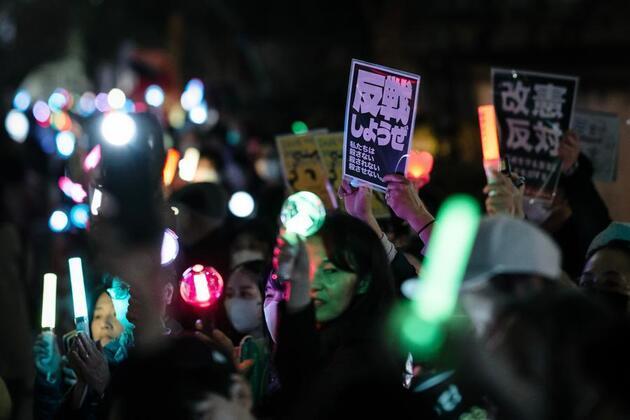
Japanese public figures have also pointed out that while the country faces numerous economic and social challenges, the Takaichi government remains obsessed with strengthening military power and feeding the military-industrial complex. Ultimately, they warn, such policies will harm Japan's economic development and social well-being, and lead the country down a dangerous path.
Lu said that Japan is seeking to break free from the constraints of the postwar order by developing offensive military capabilities, while also promoting military integration with the United States and helping Washington consolidate and strengthen its alliance system.
Such moves could intensify bloc confrontation and spark a regional arms race. The irony, he said, is that such a Japan still claims to be a "stabilizer" for regional peace and security.



 Share
Share
 Tweet
Tweet
 Share
Share
 Flip
Flip
 Email
Email